Why the library?
What better venue than a public library to reach a large cross-section of America? Unless a person is already involved in animal issues, they usually are unaware of many basic facts pertaining to the social lives and consciousness of other animals, as well as the injustices that take place every day. Tribe of Heart documentaries encourage viewers to look at these issues from a broad philosophical perspective while also offering a transformative emotional experience. Audience members are often inspired by the stories of people who find a way to respond to injustice with creativity and nonviolence. Hence, Tribe of Heart films are superb educational vehicles for reaching out to newcomers to issues of animal ethics and the journey of awakening conscience. A wide range of people patronize our public libraries, and DVD collections are typically one of the most highly utilized resources in a library's offerings.
Many copies of Tribe of Heart films have been placed in library circulation through the efforts of volunteers (see some success stories in the right hand column), and without exception, we've found that the rate of use of those copies has been very high. Because of this, the effort you make to reach out to your local library or library system can have a big impact. Nearly every day at Tribe of Heart we hear from people who are grateful for the way their lives have been changed by watching these films. Many people who see one of the films goes on to tell others about it, and the wave of change keeps growing. The step-by-step guide below, written by Tribe of Heart volunteer Annette Swartz, an expert in library outreach, will help you make the most of your efforts.
Background information
Many (but not necessarily all) local libraries are part of a larger regional and state library system network. It is best to concentrate first on your local library, establish good relations with them, and work to get the films into their dvd collection. Once successful at the local level, talk with the staff of that library about ways to reach the larger regional and state library network. The set-up and functioning of these networks differs in every state. A supportive librarian or two at the local level can explain the workings of the larger system to you, and might even be willing to make phone calls and advocate for the film’s acceptance into the larger system. Since libraries at every level receive a tremendous number of potential resources for their collections, sending films out without first establishing interest is not likely to be effective.
1. Assess current video collection
Determine if the library has an audio-visual department. If it does, spend some time looking into their collection. If their collection contains documentaries or educational films on animals, Tribe of Heart films might fit right in. If their collection lacks such films, then the film could help to meet that need.
2. Gather supporting literature
When you meet with the head librarian or the librarian in charge of DVD/video holdings, it’s very helpful to have informational literature to give to her/him. We have several pieces available that you can download and print free of charge. Familiarize yourself with these resources so you can draw on appropriate reviews and commentary when needed. A well-informed presentation makes all the difference.
3. Present the film to librarian
Take a copy of the film and your stack of literature to the head librarian or librarian in charge of the film collection. Describing the film (accurately) with phrases like "humane education" and "a very positive, life altering experience," or (for The Witness) "an inspiring story about how one man changed from a life of violence to a life of compassion" work well. These descriptions accurately convey the spirit of the films, and are likely to encourage interest.
When introducing The Witness, it is helpful to point out that the film has been shown in 32 film festivals worldwide, that it has won eight film festival awards for best documentary, it has been broadcast on several regional PBS stations and nationally on LinkTV, and has also been endorsed by teachers' associations. Show them our handout, The Witness for Teachers and Librarians, which includes reviews of the film in Booklist and School Library Journal, two trusted review sources for librarians, which each gave The Witness high marks. Also, mention Howard Rosenberg's review in the Los Angeles Times. All of these items can be found on the downloadable resources web page.
If you are a patron of the library, tell them so. Tell them that you would like to make a donation of a wonderful film (or two) to their collection. You can mention why you think viewing the film is such a positive experience, and why you would like to make it available to others. Inform the person that telling these stories entails some scenes depicting the injustices animals endure, but that these scenes are handled in a sensitive way, and are vital to the message of the film(s). Mention that the personal journey of redemption portrayed in the film(s) has inspired many of the films' viewers, and highlight the films' ability to appeal to people of all ages and backgrounds. Your natural enthusiasm for these films should spark their interest to view them.
Offer to leave literature along with a copy of the film(s) for their review. Leave your contact information with them and mention that you would like to check back with them in a week. Follow-up is extremely important at this point. People will sometimes delay watching the films because they are too busy and/or uncomfortable with the content. Sometimes several friendly follow-up calls are needed. Again, your enthusiasm and professionalism will go a long way toward achieving a positive result.
Another way to approach the library is to first send a letter describing the film (see sample letters written by other community educators, in right column), and then follow up with a personal visit or phone call.
4. Monitor film’s use
Typically, once the librarian sees one of our films, he/she will accept it into their collection. After it has been catalogued, visit the audio-visual department. Make sure that it has been placed in the "new films" section, and offer a publicity poster for them to display (also in our downloadable resources).
5. Publicize film's availability
Once a film is accepted, the next step is making sure that patrons know it is available. If the library has a community table for literature, seek permission to leave information there about the film. Highlighting selected critics’ comments or endorsements is eye-catching. If allowed, you could also make a sign advertising that the film is available through the audio-visual department. If this sort of table space is available to you, check back regularly to restock the literature.
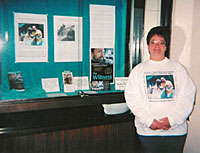
Sometimes libraries have display windows at the entrance to the building that are available to any group for promoting their community services or information. If this is the case, consider doing a window featuring the film. Ideas for this are large posters (available in the Tribe Shop), enlarged quotes from endorsements or the critics’ reviews. If your library offers any additional way to display the film give it a try. You can also make up flyers about the film and leave them at places like local coffee shops, health food stores, health clubs and laundromats promoting the fact that it is available at the library. Over time, a little extra effort can dramatically increase the number of people you are reaching.